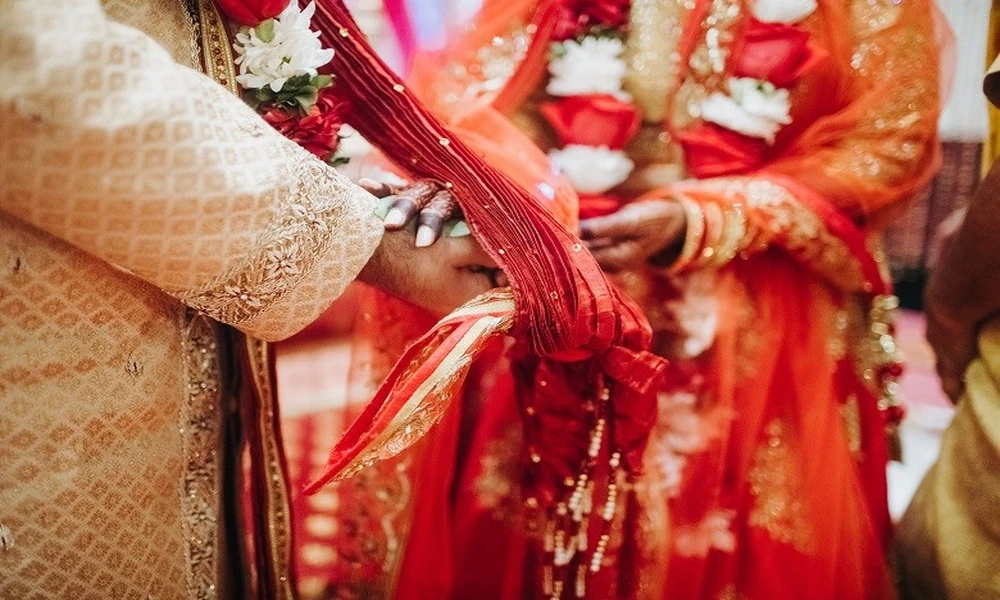
For many Indian families, finding a match has always started close to home: a relative’s suggestion, a word at a temple function, a list kept by a community office. That instinct has not gone away. What has changed is the route. Searches such as Ahir Sonar matrimony, GSB Konkani matrimony or Brahman Samaj matrimony now lead people to online profiles, community WhatsApp groups and digital registers that sit alongside the older, paper-based ways of making introductions.
The shift raises practical questions. How do these services actually work, what should a family check before sharing a profile, and how does the person getting married keep the final say? The answers matter as much to a 28-year-old engineer in Bengaluru as to parents who have used the same community bureau for decades.
What Is a Vadhu Var Suchak Mandal and How Does It Work?
In Marathi, vadhu means bride and var means groom. A vadhu var suchak mandal is, in plain terms, a marriage information bureau, often run by a community association, a trust or a small group of volunteers. Families register a son or daughter with basic details, a photograph and, where the family wishes, horoscope information. The mandal keeps these records and lets registered families look through profiles that match what they are seeking.
Many of these bureaus began as notebooks and printed booklets. Members would visit the office on a weekend, leaf through files and note down contact details. Plenty still run that way, and some families prefer it because a known person sits behind the desk. If you are looking for a vadhu var suchak mandal in Pune, you will find a mix of long-running community offices, newer bureaus with an online register, and groups that work almost entirely through phone and messaging.
Fees, membership rules and the level of checking vary a great deal from one mandal to the next. Some ask for identity documents and confirm details in person. Others accept whatever the family writes on the form. It is worth asking how a bureau verifies its members before you hand over personal information.
What Happens at a Community Melava?
A melava is a gathering. In the matrimony sense, it is an introduction event where candidates and their families meet in one hall, usually organised by a community association. Each participant may get a short time on stage to introduce themselves, and a printed or digital booklet of profiles is often handed out. Families then follow up privately with those they would like to know better.
Melavas remain popular across Maharashtra because they compress months of enquiries into a single day. A Teli Samaj vadhu var event, for example, might draw families from several districts who would otherwise never cross paths. The format suits people who want to see and speak to a prospective match before exchanging horoscopes or arranging a home visit.
There are trade-offs. Some candidates find the stage introduction uncomfortable, and a busy hall leaves little room for real conversation. Many organisers now let participants register without attending, so their profile goes into the booklet even if they cannot travel.
How Does Online Community Matrimony Differ from Traditional Bureaus?
Online community matrimony takes the same idea, a pool of profiles from people who share a background, and puts it on a website or app. Users create a profile, set preferences for age, education, location, language and other factors, and receive suggested matches. Search filters let a family narrow a list by community, sub-community or region in a way that would take hours with a printed file.
The reach is the obvious difference. A family in Nagpur can see profiles from Mumbai, Dubai or Toronto on the same screen. That suits communities whose members have moved across cities and countries over the past few generations. GSB Konkani matrimony searches, for instance, often come from families in Goa, coastal Karnataka, Kerala and Mumbai, since Gaud Saraswat Brahmins are a Konkani-speaking community spread along the west coast.
The weakness is distance. Online, you cannot read a person’s manner across a table, and anyone can type anything into a form. The convenience of a large pool comes with a greater need for caution.
How Can Families Verify a Matrimony Profile Before Moving Forward?
Verification is the single most useful habit for anyone using a matrimony service, online or offline. A few checks catch most problems early:
- Ask whether the service verifies phone numbers, identity documents or both, and what a verified badge actually means on that platform.
- Speak by video call before meeting, and be wary of anyone who keeps postponing it.
- Confirm education and employment through details you can check independently, such as a professional profile or a mutual contact.
- Meet the first few times in public places, with family aware of where you are.
- Never send money, gifts or document copies to someone you have not met, whatever the reason given.
Fraud on matrimony platforms tends to follow a pattern. A profile looks impressive, the person is always abroad or too busy to meet, and before long there is a request for money for a visa, a medical emergency or a customs fee. If a conversation moves towards money before trust has been built in person, treat that as a reason to stop and report the profile.
How Do Horoscope and Gotra Matching Fit into a Match Search?
For a number of families, horoscope matching (kundali milan) is part of the process. Astrologers compare the birth charts of two people and give an assessment of compatibility. Some families place a lot of weight on it, others treat it as one input among several, and many do not use it at all. Gotra, a lineage traced through the paternal line, is another factor that certain families take into account when deciding whether a match is suitable.
Matrimony services usually handle this by letting users add birth details or gotra to a profile and choose whether matching should influence their suggestions. Brahman Samaj matrimony listings, for example, may include fields for these details, while other listings leave them out entirely. None of this is mandatory, and how much it matters is a decision for each family and, above all, for the two people involved.
How Can Individuals Keep Their Own Choice and Privacy at the Centre?
Consent is the foundation of any marriage, and community matchmaking works best when the person getting married is part of every decision. Parents may shortlist profiles, but the individual should see them, speak to the people involved and feel free to say no without pressure. Under Indian law, both parties must freely agree to the marriage, and a good service respects that from the first introduction.
Privacy needs the same attention. Choose who can see your photographs and contact details, and avoid listing a home address or workplace on a public profile. Remove or hide your profile once you are engaged. If a mandal or platform shares your details with third parties, you are entitled to ask how and why.
What Should You Look for in a Trustworthy Community Matrimony Service?
The best community services, whether a decades-old mandal or a newer platform, share a few qualities. They explain clearly how profiles are checked, give users control over who sees what, and act quickly when someone reports suspicious behaviour. A sensible approach is to use community networks for the trust they bring, online tools for their reach, and your own judgement for everything in between.