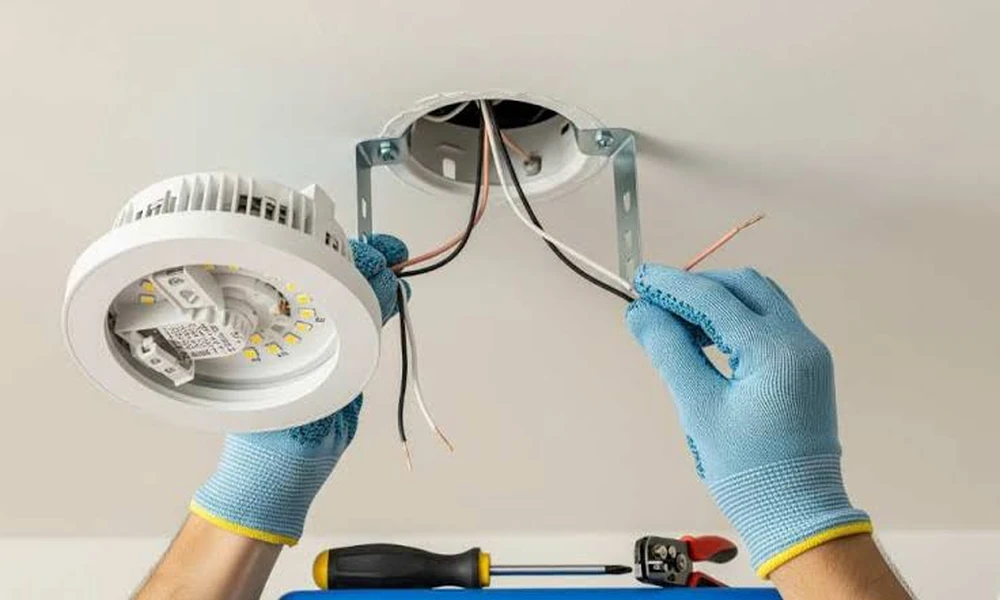
Picture a Saturday afternoon in a two story house built in the early 1990s. The owner has a case of new LED bulbs, twists one into every recessed can in the kitchen and family room, then slides the dimmer up. Half the lights shimmer. One hums. The hallway fixture keeps a faint glow even after it has been switched off. Nothing is broken, exactly. The bulbs have simply landed in a house that was wired, insulated and fitted with controls for a very different kind of light.
That mismatch shows up constantly for electricians around the Twin Cities, including Gray Duck Electric, a locally owned contractor in Eden Prairie whose licensed crews take on LED lighting work along with panel upgrades, repairs and new construction wiring for both homes and businesses. Ask anyone who does this work for a living and you will hear the same thing. A good lighting upgrade is rarely about the bulb itself.
An LED change touches four layers of a house. There is the attic or ceiling cavity above the fixture, the fixture housing, the small electronics inside the lamp, and finally the switch on the wall. Following the upgrade from top to bottom explains nearly every complaint homeowners run into.
The Attic Gets a Vote Before Anything Lights Up
Recessed cans were the signature ceiling light of suburban homes for decades, and many of them were never airtight. Each one can act like a small chimney, pulling warm, moist indoor air into the attic. In a cold climate that air carries trouble with it. Moisture condenses as frost on the roof deck, and the extra warmth melts snow unevenly, which feeds the ice dams Minnesota homeowners know too well.
Older cans also come in two flavors. Fixtures rated IC can sit in direct contact with insulation, while non IC housings need roughly three inches of clearance so they do not overheat. Plenty of attics have insulation piled right against the wrong type. An LED conversion is a natural moment to fix that. Gasketed retrofit trims can seal the opening of an existing can, and slim canless wafer lights replace the old housing entirely with a sealed, low profile fixture that leaks far less air.
Heat Still Matters Inside the Fixture
LEDs run much cooler than incandescent bulbs, yet the electronics that drive them dislike heat. Every LED lamp contains a driver that converts household alternating current into the steady direct current the diodes need. Bake that driver inside a fully enclosed globe or a tight ceiling fixture and its lifespan shrinks quickly.
That is why packaging calls out whether a bulb is rated for enclosed fixtures. The long life printed on the box assumes reasonable operating temperatures. According to the U.S. Department of Energy, residential LEDs use at least 75 percent less energy and can last up to 25 times longer than incandescent lighting, though those figures depend on the lamp being installed where it can breathe.
Reading the Box Like an Electrician Would
Bulb packaging carries more useful information than most people realize. A few details decide whether a lamp suits its spot.
- Lumens describe brightness. Watts only describe energy use, so a 9 watt LED producing around 800 lumens stands in for an old 60 watt bulb.
- Color temperature, listed in kelvin, sets the mood. Around 2700K reads warm and amber, 3000K feels soft white, and 4000K to 5000K leans cool and crisp.
- Color rendering index, or CRI, shows how faithfully colors appear. A rating of 90 or higher makes a real difference over kitchen counters and bathroom vanities.
- The dimmable label only means the lamp can dim. It says nothing about whether it will behave on the dimmer already in the wall.
- Damp and wet ratings matter for bathrooms, covered porches and anything exposed to weather.
The Wall Switch Is Where Most Upgrades Stumble
Older dimmers were designed for incandescent loads that drew 60 watts or more per bulb. Many have a minimum load requirement, and a row of LEDs drawing 8 or 10 watts each may fall below it. The result is flicker at low settings, lights that pop on suddenly halfway up the slider, or the ghostly glow in a fixture that is supposedly off.
The fix usually involves a dimmer built for LED loads, often marked for CL or ELV compatibility. Many of these include a low end trim adjustment that lets an installer tune out flicker at the bottom of the range. Lamp manufacturers also publish compatibility lists showing which bulbs pair reliably with which dimmers, and checking one saves a lot of guesswork.
Smart switches add another wrinkle. Most need a neutral wire in the switch box to power their own electronics. Homes from the 1970s through the 1990s frequently used switch loops with no neutral at the switch, since nothing required one then. Current electrical code calls for a neutral at most switch locations, but older boxes predate that rule. Some smart dimmers work without a neutral, though they tend to be pickier about LED loads.
Choosing Light for Long Northern Winters
In a place where December daylight fades by late afternoon, color temperature shapes how a home feels for months. Warmer light around 2700K suits living rooms and bedrooms in the evening. Kitchens and home offices often benefit from 3000K to 3500K for clearer task lighting. Mixing temperatures in an open floor plan is the most common regret, because a cool kitchen next to a warm living room looks patchy once every fixture is on. Tunable white fixtures, which shift color through the day, have become an easy way around that choice.
Outdoors, LEDs have a genuine advantage in cold weather. Compact fluorescents struggled to warm up in subzero temperatures, while LEDs reach full brightness instantly. Photocells and motion sensors installed years ago may still misbehave with low wattage lamps, so exterior controls deserve the same compatibility check as indoor dimmers.
When the Project Grows Past One Room
Shops, offices and finished basements often still run on fluorescent tubes. Converting them presents two paths. Plug and play tubes slide into the existing ballast, which is quick but leaves an aging component in charge. Ballast bypass tubes remove the ballast and wire the sockets directly to line voltage, which requires rewiring and clear labeling so nobody installs a fluorescent tube in that fixture later.
The old tubes need proper handling too. They contain mercury, and Minnesota law keeps mercury containing lamps out of household trash, so they belong at a county drop off or a retailer recycling program.
Back in that 1990s kitchen, the shimmer and hum were never a mystery so much as a conversation between parts that were not designed to work together. Seal the ceiling, give the driver room to breathe, pair the lamps with a dimmer built for them, and the same house delivers steady, warm light for many years without anyone thinking twice about it.